What is Integrated Drilling and Well Management?
Updated: Mar 16
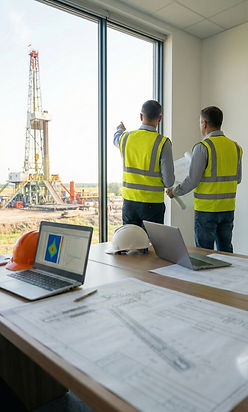
Integrated drilling and well management is an operating model in which geology, drilling engineering, well services, HSE, logistics, and operational decision-making are managed as one connected system instead of isolated functions.
In traditional projects, each discipline often works in sequence. Geology completes a study, drilling prepares a program, service companies execute, and the operation reacts once problems show up. That approach can still function, but it is slower, more reactive, and more exposed to handoff gaps.
An integrated model changes that rhythm. Teams work against shared objectives, shared data, and one execution plan from pre-spud planning to final handover. In practice, that usually leads to faster response times, lower non-productive time (NPT), better accountability, and more consistent well quality.
Why Integration Matters in Well Delivery
Well delivery is a chain of technical and operational decisions. Small weaknesses in one part of the chain often become expensive delays later.
- A mud property mismatch can trigger hole instability.
- Late casing decisions can increase stuck-pipe exposure.
- Weak logistics planning can stop drilling even when the rig is ready.
Integration reduces those risks because decisions are made earlier and with all relevant functions in the room. It also makes performance more visible because everyone follows the same operational KPIs.
Core Components of Integrated Drilling and Well Management
1. Unified planning
All functions contribute to one integrated well plan that includes:
- formation and pore pressure expectations
- casing and cementing strategy
- bit and BHA selection
- mud program and contingency steps
- logistics milestones and critical path assumptions
2. Real-time operational coordination
During execution, integrated teams review the same live signals:
- rate of penetration (ROP)
- torque and drag trends
- equivalent circulating density (ECD)
- mud losses and return behavior
- downtime events and root causes
The point is not only to watch data. The point is to define who acts, when they act, and what escalation path is used.
3. Embedded risk and HSE control
In a strong integrated model, the risk register is not static. It evolves as the well evolves. HSE is built into technical decisions rather than handled as a separate compliance checklist.
4. Performance management and learning loops
Each section and each well should end with a KPI review, an issue log, and clear lessons learned for the next well.
5. Clear governance and decision rights
Teams need clarity on who approves technical changes, who owns stop-go decisions, what triggers escalation, and what response SLA applies to critical events.
Final Takeaway
Integrated drilling and well management is not a software package or a single service line. It is a disciplined way to plan, execute, and improve well delivery as one system.
For operators under cost, schedule, and safety pressure, integration is often the difference between reacting to problems and staying ahead of them.
Frequently Asked Questions
What is the biggest difference between integrated drilling and a conventional model?
In a conventional model, teams often work sequentially and inside separate silos. In an integrated model, disciplines work against the same data, the same targets, and the same operational rhythm.
What is the first step in moving to an integrated model?
The most practical first step is to select one pilot well and run it with a shared KPI set and a structured daily integrated operations cadence.
Which KPIs usually improve first?
NPT rate, response time to critical events, section duration versus plan, and cost variance are usually the first metrics to improve.
Genellikle NPT oranı, kritik olaylara müdahale süresi, plan-gerçekleşen section süreleri ve maliyet sapmaları üzerinde güçlü iyileşme görülür.

